Well my first three days of working alone went well. Nothing went wrong. I was also fairly productive: I cleaned the carnivore kitchen, scrubbed and refilled the coati and red wolf pools, raked the leaves from a maned wolf enclosure, weed-whacked maned wolf holding pens and the area around wolf circle, and dug up a cactus that was in the way. I managed to not get poked while removing and transporting the cactus, but later I found a bunch of cactus hairs (they still hurt!) on the underside of my shirt. So, for the past couple of hours I've been removing random cactus hairs from my belly, chest, and hands. Awesome.
On last Thursday, my first day working here, I helped crate and then carry a cheetah for a move. I sat in the back of the pick-up truck next to the crated cheetah and held on to it to make sure the crate didn't slide around. The cheetah's name was Sunshine and she was being moved to our cheetah facility on the hill. There is a male up there that they want her to breed with. How many people have been able to sit in the back of a truck with a cheetah?
Inglourious Basterds was a fantastic movie!
FYI, my address:
c/o Fossil Rim Wildlife Center
2155 County Road 2008
Glen Rose, TX 76043
Sunday, August 30, 2009

Thursday, August 27, 2009
My Day
I'm going to outline my typical day here at Fossil Rim:
I work Thursday through Monday, with Tuesdays and Wednesdays off. On Thursdays I work with Jason and the 20 cheetahs here at Fossil Rim. Every other day, I work with the wolves and coatis in the Intensive Management Area (IMA).
I begin my day at the carnivore kitchen which is attached to the center's vet clinic. It's a very small kitchen with a fridge, a sink, and just enough room for the animals' diets and enrichment items. In here we prepare the food for the animals and keep record of important stuff, such as how much each animal did not eat, any medical problems, or just anything unusual that may have happened throughout the day. Each day a daily log sheet needs to be filled out with this information on it. Some animals also need medication and this is where we prepare it.

Most of my animals eat dog kibble. When you think about it, wolves and dogs are very closely related so it makes sense. They get Purina lamb and rice kibble. The maned wolves eat kibble but also get a bunch of fruits and veggies in their diets because they are omnivores. The coatis are also omnivores and eat a bunch of stuff like fruits, eggs, peanuts, and chicks. Once the morning diets are completed, I feed the animals. I go into the pens with the maned wolves, red wolves, and coatis. The Mexican grey wolves can be more aggressive, so I do not go into their pen alone. Though they can be dangerous if cornered, the maned and red wolves are much more scared of humans than anything and are not aggressive. The coatis love human interaction and I've already had them climb up my legs and onto my shoulders. They are fun but they stink.

After feeding time, I need to pickup poop in the yards. The maned wolf is pretty smelly and needs to be cleaned up daily. The red wolves' should probably be picked up every other day. The same with the Mexican greys. Once pickup is done, it's time to do dishes and by the time those are done, it's almost lunch time.
The afternoon is reserved for projects and random chores, which may include cleaning out wolf pools, yard work in the animals' yards, and enrichment. The maned wolves and the coatis both get a PM diet as well, so that is usually prepared and delivered to the animals between 4 and 5, before the end of the day.

So far, I have only worked with my supervisors, Kristen and Jason. Tomorrow I start working on my own and I will continue to work alone for 4 days out my work week. This is VERY rare for an internship and I think I will become much more confident in my work because of the independence this place provides their interns. I have yet to really work with the cheetahs (that starts next week), so I am really excited to get started with them. So far, I'm having a good time. It's nice that I already know the staff and I don't have to go through that awkward stage where I don't know anybody.
Let's hope my first week working alone goes alright.
On a sidenote: I was mentioned on the Cheetah Conservation Fund website a few weeks ago: Click Here to Read the Article.
I work Thursday through Monday, with Tuesdays and Wednesdays off. On Thursdays I work with Jason and the 20 cheetahs here at Fossil Rim. Every other day, I work with the wolves and coatis in the Intensive Management Area (IMA).
I begin my day at the carnivore kitchen which is attached to the center's vet clinic. It's a very small kitchen with a fridge, a sink, and just enough room for the animals' diets and enrichment items. In here we prepare the food for the animals and keep record of important stuff, such as how much each animal did not eat, any medical problems, or just anything unusual that may have happened throughout the day. Each day a daily log sheet needs to be filled out with this information on it. Some animals also need medication and this is where we prepare it.

This is Pia, a female maned wolf.
Most of my animals eat dog kibble. When you think about it, wolves and dogs are very closely related so it makes sense. They get Purina lamb and rice kibble. The maned wolves eat kibble but also get a bunch of fruits and veggies in their diets because they are omnivores. The coatis are also omnivores and eat a bunch of stuff like fruits, eggs, peanuts, and chicks. Once the morning diets are completed, I feed the animals. I go into the pens with the maned wolves, red wolves, and coatis. The Mexican grey wolves can be more aggressive, so I do not go into their pen alone. Though they can be dangerous if cornered, the maned and red wolves are much more scared of humans than anything and are not aggressive. The coatis love human interaction and I've already had them climb up my legs and onto my shoulders. They are fun but they stink.

A coati eating its diet.
After feeding time, I need to pickup poop in the yards. The maned wolf is pretty smelly and needs to be cleaned up daily. The red wolves' should probably be picked up every other day. The same with the Mexican greys. Once pickup is done, it's time to do dishes and by the time those are done, it's almost lunch time.
The afternoon is reserved for projects and random chores, which may include cleaning out wolf pools, yard work in the animals' yards, and enrichment. The maned wolves and the coatis both get a PM diet as well, so that is usually prepared and delivered to the animals between 4 and 5, before the end of the day.

A cheetah. I love these cats.
So far, I have only worked with my supervisors, Kristen and Jason. Tomorrow I start working on my own and I will continue to work alone for 4 days out my work week. This is VERY rare for an internship and I think I will become much more confident in my work because of the independence this place provides their interns. I have yet to really work with the cheetahs (that starts next week), so I am really excited to get started with them. So far, I'm having a good time. It's nice that I already know the staff and I don't have to go through that awkward stage where I don't know anybody.
Let's hope my first week working alone goes alright.
On a sidenote: I was mentioned on the Cheetah Conservation Fund website a few weeks ago: Click Here to Read the Article.
Monday, August 24, 2009
Back in Texas
Well I finally made it back to Texas and have actually already worked my first week here. I have a short recap of my trip down here:
We left Ohio on Monday morning with plans to arrive in Branson around 6:00 PM. The drive was going great until we got to St. Louis. As soon as we crossed the Missouri border, rain started falling so hard that we could not see ten feet in front of us. Because I hate driving in the rain since my accident last year (ick), we pulled off and waited out the hardest parts in a gas station parking lot. It was clear that the rain wasn't going to stop completely so we set off in moderate showers to cross the state of Missouri. About 4 hours later, we arrived in Branson at our fantastic hotel, the Residence Inn by Marriot. Our hotel room retailed at $180 a night, but thanks to our middle-man, William Shatner, we managed to name our own price for $58 a night - not bad for a one-bedroom suite with a full kitchen (free popcorn and coffee!!) and 2 flat-panel televisions (yes, I said two!).
Our main reason for coming to Branson was Silver Dollar City, a relative of Dollywood situated a few miles from Downtown Branson in the Ozark hills. We somehow got lucky and happened to be driving down during the park's Summer Ride Days, a week of cheap admission when it's mostly rides that are opened. The park normally boasts a number of demonstrating craftsmen and shows that weren't operating that week. This was great because we were able to get in for a great value just to ride the rides. I celebrated a milestone at Silver Dollar City: my 200th roller coaster! The honor went to Powder Keg: A Blast in the Wilderness, a neat coaster that launches you over a hill and through the woods, but somehow manages to not end up at grandmother's house (LOL). Because Branson is, quite frankly, extremely hokey and almost entirely not our thing, we didn't do much else there.

The next day we finished driving 8 more hours to Glen Rose, Texas. The drive through Arkansas was absolutely beautiful. The only interesting thing about Oklahoma was that we drove through Carrie Underwood's hometown (yippee!?). We finally arrived in Texas and the Dallas area just in time for rush-hour and added about an hour to our arrival time. Now I'm here, living in the same house as before, but this time with a housemate named Tony.
My current internship is going to be a little different than my previous two. This time I will be working with three species of wolves, small carnivores named coatis, and 20 cheetahs. Here's a little background info pulled from wikipedia about each of these animals...
Mexican Grey Wolves (Canis lupus baileyi)
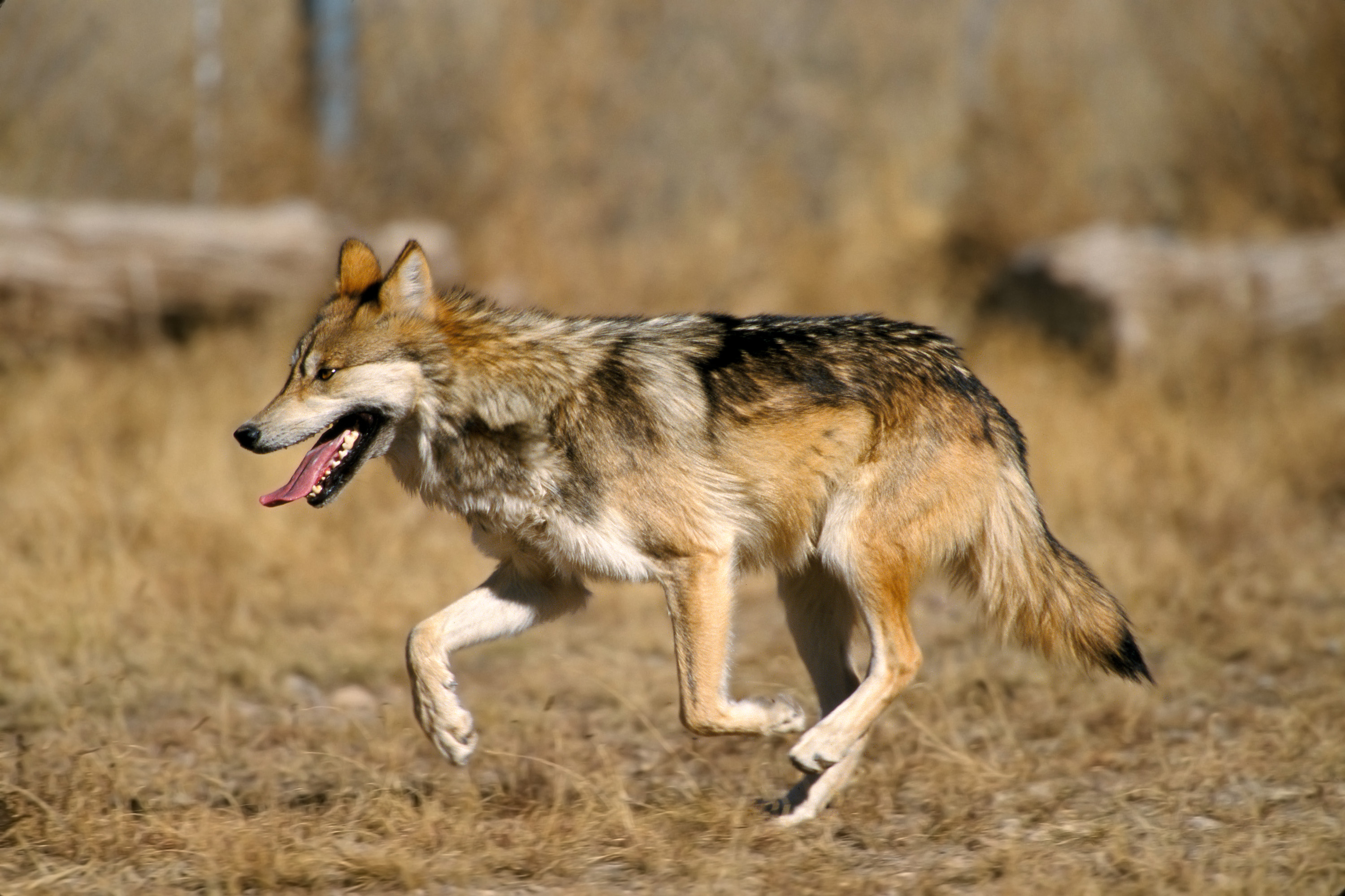
 Until recent times, the Mexican Wolf ranged the Sonoran and Chihuahuan Deserts from central Mexico to western Texas, southern New Mexico, and central Arizona. By the turn of the 20th century, reduction of natural prey like deer and elk caused many wolves to begin attacking domestic livestock, which led to intensive efforts by government agencies and individuals to eradicate the Mexican Wolf. Hunters also hunted down the wolf because it killed deer. Trappers and private trappers have also helped in the eradication of the Mexican Wolf. (Note that recent studies completed by genetics experts show evidence of Mexican Wolves ranging as far north as Colorado). These efforts were very successful, and by the 1950s, the Mexican Wolf had been eliminated from the wild. In 1976, the Mexican Wolf was declared an endangered subspecies and has remained so ever since. Today, an estimated 300 Mexican Wolves survive in 49 facilities at the United States and Mexico.
Red Wolves (Canis rufus)

The Red Wolf (Canis rufus) is a North American canid which once roamed throughout the Southeastern United States and is a glacial period survivor of the Late Pleistocene epoch.[3] Its natural range extends from Texas to Florida. A population is being reintroduced to North Carolina.[4] Scientists suggest that Red Wolf populations were extirpated from the wild and are now highly endangered.


We left Ohio on Monday morning with plans to arrive in Branson around 6:00 PM. The drive was going great until we got to St. Louis. As soon as we crossed the Missouri border, rain started falling so hard that we could not see ten feet in front of us. Because I hate driving in the rain since my accident last year (ick), we pulled off and waited out the hardest parts in a gas station parking lot. It was clear that the rain wasn't going to stop completely so we set off in moderate showers to cross the state of Missouri. About 4 hours later, we arrived in Branson at our fantastic hotel, the Residence Inn by Marriot. Our hotel room retailed at $180 a night, but thanks to our middle-man, William Shatner, we managed to name our own price for $58 a night - not bad for a one-bedroom suite with a full kitchen (free popcorn and coffee!!) and 2 flat-panel televisions (yes, I said two!).
Our main reason for coming to Branson was Silver Dollar City, a relative of Dollywood situated a few miles from Downtown Branson in the Ozark hills. We somehow got lucky and happened to be driving down during the park's Summer Ride Days, a week of cheap admission when it's mostly rides that are opened. The park normally boasts a number of demonstrating craftsmen and shows that weren't operating that week. This was great because we were able to get in for a great value just to ride the rides. I celebrated a milestone at Silver Dollar City: my 200th roller coaster! The honor went to Powder Keg: A Blast in the Wilderness, a neat coaster that launches you over a hill and through the woods, but somehow manages to not end up at grandmother's house (LOL). Because Branson is, quite frankly, extremely hokey and almost entirely not our thing, we didn't do much else there.

The next day we finished driving 8 more hours to Glen Rose, Texas. The drive through Arkansas was absolutely beautiful. The only interesting thing about Oklahoma was that we drove through Carrie Underwood's hometown (yippee!?). We finally arrived in Texas and the Dallas area just in time for rush-hour and added about an hour to our arrival time. Now I'm here, living in the same house as before, but this time with a housemate named Tony.
My current internship is going to be a little different than my previous two. This time I will be working with three species of wolves, small carnivores named coatis, and 20 cheetahs. Here's a little background info pulled from wikipedia about each of these animals...
Mexican Grey Wolves (Canis lupus baileyi)
Red Wolves (Canis rufus)

The Red Wolf (Canis rufus) is a North American canid which once roamed throughout the Southeastern United States and is a glacial period survivor of the Late Pleistocene epoch.[3] Its natural range extends from Texas to Florida. A population is being reintroduced to North Carolina.[4] Scientists suggest that Red Wolf populations were extirpated from the wild and are now highly endangered.
Maned Wolves (Chrysocyon brachyurus)

The Maned Wolf (Chrysocyon brachyurus) is the largest canid of South America, resembling a large fox with reddish fur.
The Maned Wolf has often been described as "a Red Fox on stilts" due to its similar coloration and overall appearance, though it is much larger than a Red Fox and belongs to a different genus. The adult animal stands almost 1 m (3.3 ft) tall at the shoulder, and weighs 20 to 25 kg (44 to 55 lb).[5] The maned wolf is the tallest of the wild canids. The long legs are probably an adaptation to the tall grasslands of its native habitat.
Coatis (Nasua narica)

Coatis, genera Nasua and Nasuella, also known as hog-nosed coons,[1] snookum bears, and Brazilian aardvarks, are members of the raccoon family (Procyonidae). They are diurnal mammals native to South, Central, and south-western North America. The word "coatimundi" (pronounced /koʊˌɑːtɨˈmʌndi/ [2]) is a commonly used misnomer applied to solitary adult males of N. nasua. The term is reported to be derived from the Tupi language
Cheetah (Acinonyx jubatus)

The cheetah (Acinonyx jubatus) is an atypical member of the cat family (Felidae) that is unique in its speed, while lacking climbing abilities. The species is the only living member of the genus Acinonyx. It is the fastest land animal, reaching speeds between 112 and 120 km/h (70 and 75 mph)[3] in short bursts covering distances up to 460 m (1,500 ft), and has the ability to accelerate from 0 to 110 km/h (68 mph) in three seconds, faster than most supercars.[4] Recent studies confirm the cheetah's status as fastest land animal.
I will update soon with more information.
Subscribe to:
Posts (Atom)